Friday, December 18, 2009

In The Christmas Spirit - Booker T & The MG's


Well, ladies and gents, I'm going to be taking a break from Solid Gold Easy Action for a couple weeks, occupied as I am with doing last minute Christmas shopping, eating obscene amounts of home cookin', and driving across America in my noble and never-ending quest for a good time. But just to tide you cats and dogs over until I return, here's a little Christmas present from the inimitable Booker T & The MG's, Stax Records' house band and without a doubt the greatest instrumental soul combo of all time. There ain't much I can write about this album: it's twelve southern-fried Christmas carols, given a soul makeover by Booker T. Jones, Steve Cropper, Al Jackson Jr., and Donald "Duck" Dunn. At the very least, it ought to make those of you in the frozen North feel a bit warmer, and it's a hell of a lot better than a Wyndham Hill Christmas sampler, I can tell you that. See y'all in 2010!

Thursday, December 17, 2009

En' A-Free-Ka - Shafiq Husayn


The development of musical Afrofuturism since the 1950's has seen many trends come and go. Sun Ra created the template with his divisive cosmic jazz experiments. Soul jazz iconoclasts like Alice Coltrane and Archie Shepp kept the spirit alive through the 60's, while George Clinton and Parliament/Funkadelic injected the -ism with a nasty dose of funk in the 70's. The 80's saw the rise of Juan Atkins and his many pseudonyms, which expressed Afrofuturist ideals through the sound of Detroit techno. Meanwhile, in New York City, Afrika Bambaataa pioneered a far-out sound that would influence 90's hip-hop heads like Del Tha Funky Homosapien and DJ Spooky to funkitize sonic galaxies in the spirit of Afrofuturism. Nowadays, we're lucky to be witnessing a new generation of Afrofuturists; a generation that has learned from and drawn from the generations of pioneers that came before them. Producers like Dâm-Funk, Ras G, and Sa-Ra Creative Partners have all created masterpieces that combine aspects of all of their predecessors, from Sun Ra to DJ Spooky. In 2009, Shafiq Husayn, one third of Sa-Ra, has created the ultimate expression of cosmic black consciousness. En' A-Free-Ka is a psychedelic voyage through jazz, soul, funk, techno, hip-hop, science fiction, and mythic poetry. The cover portrays Husayn in a state of serene self-consciousness, sitting like a majestic Ethiopian negus amidst a collection of African objets d'art. The sounds contained within these grooves are no less striking: Husayn is always at the center of his sound, presiding over the rhythm and poetry with effortless grace. Whether he's surrounded himself with blaring saxophones, chirping synthesizers, or clattering tribal percussion, he steers the course of the music with astronomical precision. "Nirvana" glides along over distorted chunks of soul jazz, while "No Moor" hustles over a nursery rhyme-like pattern that barely hides Husayn's righteous anger beneath its shimmery surface. Groovy. I suppose there's not much more I can say to promote this album, except that it feels somehow... triumphant. Yeah, triumphant.

If you knew better, you'd do better... take it from me.

Wednesday, December 16, 2009

I Can't Stand The Rain - Ann Peebles


It's going to be hard to write a lucid and well thought-out review of this album because, quite frankly, I think it's absolutely perfect. 70's soul never got more grandiose, sultry, or gloriously left-of-center than it did here, thanks in no small part to Willie Mitchell's tight production work. He and his vaunted Hi rhythm section are on top form here: Al Jackson (the greatest drummer of all time, if you ask me) and his deliciously metronomic drumming takes the rhythm into another dimension, while Mitchell's highly unorthodox studio flourishes create a sonic atmosphere that's alternately tense, joyous, threatening, and sweet. And then, of course, there's Ms. Ann Peebles. Ann was never as saleable a talent as Carla Thomas or Jean Knight, and her creaky, mournful voice was ill-suited to showboaty R&B radio hits. But her work here is nothing short of spectacular. "I'm Gonna Tear Your Playhouse Down" was a minor radio hit and continues to be a popular sample source, due in no small part to Ann's fierce vocal performance. "Run, Run, Run" is another up-tempo hit that recalls Willie Mitchell's deliriously awesome work with Al Green. But wait just a second, folks. Allow me to take a deep breath before I try and extol the virtues of this album's title track, one of the greatest conglomerations of sounds ever put to wax, and one of the greatest soulful and artistic expressions ever seen by mankind. Hyperbole? Fuck that. I could listen to this song thirty times a day for the rest of my life and still feel somethin' way down deep in my soul with every damn listen. It's eccentric, majestic, and downright beautiful, from the unsettling string-plucking that introduces the song, to the brilliant and moving instrumental bridge. Goddamn this is a helluva song. Even if you hate R&B music and everything it stands for, do your soul a favor and give Ms. Ann a listen.

I know you've got some sweet memories, but like a window, you ain't got nothin' to say.

Tuesday, December 15, 2009

Friday At The Hideout: Boss Detroit Garage 1964-67 - Various Artists


They don't call Detroit "Rock City" for nuthin'. Back in the mid 60's, when, for a few brief minutes, the world's eyes turned to Detroit during Motown's heyday, a homegrown garage rock/maximum R&B scene was just beginning to take form. This scene would eventually see the rise of proto-punk legends The Stooges and The MC5, who in turn would watch acts like Bob Seger, Grand Funk Railroad, and Ted Nugent rise to superstardom in the 70's. But before the long, greasy hair, endless riffage, and drunken ribaldry of "Detroit rock", Hideout Records and its accordingly named dance club provided an outlet for southeast Michigan's hep teens to shimmy and shake every weekend. Dave Leone's small garage rock imprint was just one of literally hundreds of its type across the nation, but it's notable for two reasons: the future stars that got started there, and the pure quality of the music released. Unfortunately, none of the tracks cut by Bob Seger for Hideout were included on this compilation due to some legal mumbo-jumbo, but his brand of workin' man's blues is well-represented nonetheless. This comp offers up some serious frat-rock breakdowns from Doug Brown & The Omens, some Kinks-y groovers from The Underdogs, and some poppier psych gems from Four Of Us and The Mushrooms (both featuring a teenage Glen Frey). But the real gems here are the two cuts from The Pleasure Seekers, an all-girl housewreckin' combo starring a sweet young Suzi Quatro. "Never Thought You'd Leave Me" sounds like a girly version of The Dovers, full of plunky bass, jazzy Fender Rhodes piano, and the kind of "California Sun" guitar riff that 60's garage bands just couldn't get enough of. And then there's "What A Way To Die", yet another song to add to the list of tunes that should've made it onto Nuggets but somehow didn't. Sounding like a deranged gutbucket punk version of The Tammys' girl-group classic "Egyptian Shumba", "What A Way To Die" goes straight for the jugular, making Suzi's later glam rock stuff sound tame and bland by comparison. For anyone interested in Detroit's thriving garage rock history, this comp is a killer.

Monday, December 14, 2009

Mazurkas - Alexander Scriabin

Alexander Scriabin is not usually spoken of with the kind of reverence reserved for the other great Russian composers (Tchaikovsky, Rachmaninoff, Stravinsky, Prokofiev, Mussorgsky), yet he certainly did as much, if not more, than his influences and protégés in expanding the sonic vocabulary of classical music. Scriabin was idiosyncratic to the core. An avowed mystic, he sought to ascend, through music, the spiritual hierarchy described by Helena Blavatsky and the Theosophists, and also composed many works inspired by Nietzsche's theories on the übermensch. Scriabin's most influential works were early experiments in atonality - increasingly eccentric experiments that were met with increasing critical ambivalence as Scriabin became ever more concerned with phenomenal conceptions of reality. His radical penultimate project, appropriately titled Mysterium, was intended to be "a grandiose religious synthesis of all arts which would herald the birth of a new world." Though it remained unfinished at the time of Scriabin's death, he believed that, when completed, Mysterium would bring about Armageddon. Yet for all of his notable wackiness, Scriabin was also a highly gifted lyrical composer. In fact, my personal favorite works of Scriabin's are among his most traditional: his études and mazurkas borrowed heavily from the mellifluous Romanticism of Chopin. This collection brings together all of Scriabin's mazurkas, composed in the early part of his career in the 1880's and 90's. This was the era of Scriabin's greatest critical acclaim; his variations on the mazurka, a form of Polish folk music, are innovative but not radical. However, they certainly do suggest the atonality that would color Scriabin's most incendiary works. I've decided to post Mazurkas because, well, they just sound so damn good. If Scriabin doesn't get the critical props afforded Rachmaninoff or Prokofiev, then perhaps it's time to reexamine our attitudes towards the Russian masters.

Thursday, December 10, 2009

Calle 13 - Calle 13


Calle 13 is notable for being pretty much the only reggaetón act to get any sort of critical respect, and if the reggaetón tag itself turns you off, have no fear: Calle 13 don't like it either, and in truth, it falls woefully short in describing the diversified brand of hip-hop that Residente and Visitante peddle. That's not to say that Calle 13 doesn't share any common ground with Daddy Yankee, Wisin y Yandel, or any other reggaetón chartbuster; there are plenty of comparable traits shared by Calle 13 and the rest of the reggaetón herd. Cheap, canny (and inexplicably infectious) digital beats, loping, dubby basslines, and rapid-fire rapping en español all contribute to the urban flava of these Puerto Rican step-brothers' debut album, but there's much more to be discovered here than stereotypical ghetto bombast. Unfortunately, I can't say anything about Residente's lyrics - my Spanish is essentially limited to "donde esta la zapateria?" - but if his gift for gab matches Visitante's gift for creating razor-sharp productions out of deceptively simple digital snippets of Latin music, then he's definitely an MC to be reckoned with. Needless to say, Visitante's production really makes this album for me: he lays out a virtual smörgåsbord of each and every type of Latin dance music, all conveniently assembled into one concise package. Cumbia, salsa, bossa nova, Latin jazz, bomba, and tango are all grist to the musical mill for Calle 13 (not to mention reggae, which forms the basis of all reggaetón). And most importantly, the album maintains a freewheeling sense of fun throughout, a vivacious positive energy that's missing from acts like, say, Don Omar. Unorthodox dance tracks like "Atrévete-Te-Te" and "La Hormiga Brava" colorfully display exactly what sets Calle 13 apart from their peers, while hits like "Suave" serve as a funky reminder that Residente and Visitante are always aiming squarely at the dancefloor.

Wednesday, December 9, 2009

African Jazz 'n' Jive - Various Artists


Aside from the occasional "world music" crossover act, African music gets very little attention here in the States. That's not entirely surprising, as African music seldom contains the sort of glossy pop appeal that makes for hit records in the US of A. But what most American consumers don't realize is that since the 1920's, African musical trends have been inextricably bound with those of the United States, particularly the black population. Beginning with the early days of jazz, when Dixieland reverberations were felt around the world, African urban centers, particularly those in Nigeria, Cameroon, and Ghana, responded with their own energetic adaptations of black American music. As time went on, West African musicians began to develop their own permutations of American music that was, in turn, born of traditional African music. The first really noteworthy movement of this type was the "township" jazz craze that dominated radio airwaves from the late 40's to the early 60's and paved the way for the popular "highlife" and Afrobeat styles that became world-famous through the work of Fela Kuti, King Sunny Ade, and others. This compilation focuses on the later days of township jazz, once it was firmly established as Africa's hippest musical force. The casual listener might be surprised at how stylistic close this is to classic American swing and bop. Indeed, only the occasional non-English lyric distinguishes it from early Charlie Parker orlate Duke Ellington. But inventive tracks like Kippie Moeketsi's "Clarinet Kwela" sound wholly unique, while Lemmy "Special" Mabase's "Kwela Blues" has a folksy, amateurish charm that's rare in American jazz from the 50's. Sure, this isn't as dynamic as Fela's Afrobeat or the percussive sounds of jùjú, but for jazz aficionados, it's a pleasant and interesting look at jazz from the heart of the groove.

Tuesday, December 8, 2009

Music Of El Topo - Shades Of Joy


Alejandro Jodorowsky's El Topo is one of cinema's most delightfully baffling head trips. Half spaghetti western, half delirious peyote-frenzied spirit vision, it truly defies classification. Jodorowsky himself composed the soundtrack, a subtly psychedelic (and surprisingly pleasant) combination of Mexican folk motifs and restrained atonal textures. John Lennon once stated that El Topo was his favorite movie; he enjoyed it so much, in fact, that he released its soundtrack on his own Apple imprint. What we have here is not the soundtrack itself, rather, its an artifact direct from 1970's burgeoning counterculture that somehow manages to make El Topo and its legacy even stranger. Shades Of Joy, a California-based psychedelic rock/jazz group tangentially connected to Jerry Garcia, recorded Music Of El Topo in 1970 as a sort of tribute to the film that doubtlessly provided them with many nights of stoned entertainment. What's puzzling about this album is how unnecessary it seems - a jazz/funk/fusion remake of a soundtrack in which the most prominent instrument is a wooden folk flute? Think I'll pass, thanks. But it's truly to Shades of Joy's credit that this album has held up so well over almost four decades. Quite frankly, it still sounds fuckin' spectacular! Shades Of Joy, led by the multi-talented Martin Fierro, weave around tunes and musical signals and motifs from the film, interspersing the flutes and acoustic guitars of the original soundtrack with furious bouts of jazz-fusion improvisation. The two most dynamic pieces here are also the most satisfying: "The Desert is a Circle" and "Flute in a Quarry" are jazz-funk monsters. "The Desert is a Circle" in particular is a dynamite masterpiece: sample-worthy breakbeats abound, and the band stretches out to its limits, all the while retaining the same pastoral Mexican-esque feel of the film's original tune. "El Topo's Dream" is another hot one, and though it doesn't have the groovy frenetic pulse of the two aforementioned tracks, it turns a simple folksy melody into a heroic march that's psychedelic in its scope. The rest of the tracks are more laid-back, settling into the kind of easygoing funk that was a staple of underground films in this era. For a virtually unknown band to rework such a singular piece of musical art in such an unexpected and colossal way is, to my mind, one of the most underrated accomplishments of the early '70's.

Too much perfection is a mistake.

Monday, December 7, 2009

Orgasm - Cromagnon


Here's a special treat for those of you thoroughly irritated by the whole "new weird America" thing that's goin' on out there in the big ol' world of music. College kids dressing up in crazee clothes and making noise in the name of "freak folk" or whatever is not a new concept, and it seems to me that most of the new crop of freaky bands sound much more restrained than the original LSD/mescaline-tormented masters they wish to emulate. Cromagnon, ladies and gents, is as weird as it ever got. Cromagnon took the inanity of 60's psychedelia to practically unthinkable extremes, and when they were done, simply packed up and went home (The Residents took over soon afterward and kept the freak flame a-burnin'). The roots of Cromagnon lie in bubblegum pop songwriters Austin Grasmere and Brian Elliot's desire to create a truly "psychedelic" album, something that would combine the American acid rock of the era with primitive folk and what they called "cave rock", which essentially amounted to clattering on rocks with sticks. The resulting album is possibly the zaniest freak-out album of all time. Julian Cope wrote of the album, "now, when you stick the needle into the groove that is opener, 'Caledonia', you'll immediately think you're listening to Einstürzende Neubauten gone black metal, then you'll realize you're WRONG and that there was no reference points such as that available in 1968," but Julian Cope is a pretentious loser, and in this case, he appears to be just namedropping. Nah, "Caledonia" doesn't sound like Einstürzende Neubauten or black metal. It sure sounds great though; something like an ancient Scottish funeral march, complete with bagpipes and occult whisperings. It's easily the best and most accessible track to be found here, which speaks volumes about how fucking crazy this album really is. "Ritual Feast of the Libido" sounds like a caveman being tortured, "Organic Sundown" retains all the percussive clatter of a voodoo ritual, "Fantasy" sounds like musique concrète in Hell, and "Crow of the Black Tree" sounds like the kind of underworldly folk that Devendra Banhart wishes we was creative enough to dream up. This is old weird America, and it never got weirder.

Saturday, December 5, 2009

1999 - Cassius


Take yourself back to the tail end of the 1990's, that magical time when a significant portion of the population was convinced that the global infrastructure would collapse come Y2K, and another sizable group was starting to feel the effects of an entire decade's worth of non-stop raving. The naïve futurism of the 90's had reached its fever pitch. Retro style was irritatingly en vogue, but pop culture in general seemed to be pointing towards some vague spacey future. It would only be logical for a decade like the 2000's to follow: a decade in which each successive short-lived cultural trend would hearken back to a dead era. Electronic music's advent in the 90's was one of the most noticeable aspects of a popular culture obsessed with the new, the unknown, the extraterrestrial. Ecstasy-fueled rave and big beat claimed most of the hype, but lurking in the shadows of the dancefloor, waiting for its moment, was "French touch" house music. Nowadays everybody's familiar with French touch: Daft Punk and Justice are the most recognizable names in dance music, while Euro-house megastars like David Guetta and Bob Sinclar have adapted the sound to fit their own populist idiom. But back in 1999, French touch wasn't purely synonymous with everyone's favorite house-wreckin' robots. Two of the pioneers of the sound, Zdar and Boombass, had already been killing crowds with their repetitive, sugary beats for nearly a decade. But when they teamed up to form Cassius, the French touch sound made a conscious transition to the retro-ism of the new millennium. Daft Punk's debut, Homework, referenced acid house and disco with a sly smirk, but the robotic appeal of Guy Manuel de Homem-Christo and Thomas Bangalter were always more concerned with invention than adaptation. Cassius, on the other hand, were content to simply rework euphoric underground disco and early electro to charm the late 90's club scene. In this way, they actually suggested dance music's future far more accurately than Daft Punk (Daft Punk themselves would adopt a decidedly retro disco style on all of their following albums). Cassius's 1999 sounds like Studio 54's cocaine glamour transposed to the neon-colored ecstasy chic of the end of the millennium: non-stop four-to-the-floor kick drums, congas, primitive drum machines, and fractured diva-esque vocals abound. It's a real head trip, as none of the tracks here are designed for radio appeal, but rather recall an era that ended around 1978 when dance tracks were designed with only the dancefloor in mind. But dayummm, this record is easily as impressive as Daft Punk, though not quite as immediately appealing. "Foxxy" is a definite highlight, colored with a deliciously wah-wah'ed out guitar lick and the kind of percussion that would make David Mancuso swoon. "Planetz" and "Nulife" are both ace disco-house hits, while an urban electro influence is apparent on the eerie "Crazy Legs", which owes as much to Detroit techno pioneers like Juan Atkins as it does to Giorgio Moroder. Electronic music in the 90's ended with this record.

Thursday, December 3, 2009

Il Grande Silenzio - Ennio Morricone


There's nothing typical about Ennio Morricone. As a composer, he is one of the 20th century's foremost talents. As a film maestro, he's fucking untouchable. Only Bernard Hermann can be said to have had the same degree of influence on film music, and not even he can compete with Ennio Morricone's track record: Maestro Morricone has written and recorded soundtracks for over 500 movies. He is, of course, best known for his work in the "spaghetti western" genre (a genre he bloody well invented, I might add), though only forty of his movies were westerns. The achingly expressive soundtracks accompanying The Good, The Bad, & The Ugly and Once Upon A Time In The West remain cornerstones of 20th century inventiveness, but it's Il Grande Silenzio that, in my opinion, stands up as Morricone's most magnificent spaghetti western recording. Sergio Corbucci's uncompromising film is about as atypical within the western genre as Morricone's work is within his chosen field: French dramatic actor Jean-Louis Trintignant stars, although he does not speak a single line throughout the entire movie. Meanwhile, a ferocious Klaus Kinski wreaks havoc on a small town in Utah during a cataclysmic blizzard. The film's finale is about as harrowing as anything in cinematic history, due in no small part to Morricone's tense, atmospheric score. What makes the maestro's recordings for Il Grande Silenzio so much more powerful than, say, The Good, The Bad, & The Ugly, is its avoidance of spaghetti western clichés (clichés Morricone admittedly invented). There aren't any cod-Native American chants here, no down-tuned Spanish guitars, and no ominous whistling. Instead, a sparse orchestra of bells, acoustic guitars, and cellos evoke the film's melancholic, wintry landscape. "Il Grande Silenzio (Restless)" is one of the finest songs in Morricone's entire canon, as much folk rock as it is grand symphonic poetry. "Prima Che Volino I Corvi" and "Immobile" are both eerie and tense as hell, providing the perfect stylistic foil to Klaus Kinski's (as always) deranged performance. And if you're looking for that vintage Morricone sound, "Voci Nel Deserto" ought to do it for you: the maestro's inimitable muse Edda Dell'Orso provides yet another magnificent wordless vocal performance that's church-like in its beauty. Unbelievably well-done.

Wednesday, December 2, 2009

The Black Gladiator - Bo Diddley


One has to wonder what was going through Bo Diddley's head in the late 60's, when he took it upon himself to reinvent the "Bo Diddley beat" for an audience of white hippies. Bo wasn't the only one, however; Muddy Waters went "psychedelic" for his Electric Mud and After The Rain albums, and Howlin' Wolf's This Is Howlin' Wolf's New Album ("He doesn't like it. He didn't like his electric guitar at first either.") sounded like a faceless white acid rock group trying to groom the blues' biggest personality for a crowd of fairweather freaks. These albums, along with Bo's The Black Gladiator, are almost universally regarded as heinous travesties, and considered by many critics to be among the worst albums ever made. Here is where I have to step in and ask you whether you really give two shits about a critic's opinion anyway, because fuck, man, these albums are 100% killer, and Bo's is the best of the bunch. I suppose The Black Gladiator does sound like shit if you approach it from a blues purist's standpoint, which I most certainly don't. Think of this as the marvelous missing link between funky soul and garage rock: it ain't quite James Brown, Stax-Volt, The Rolling Stones, or Quicksilver Messenger Service (although it sounds a little bit like all of those), and it sho' ain't vintage Ellas Otha Bates (there's barely an echo of "Who Do You Love" to be heard here). But it jives, shucks, grooves, and ultimately rocks much harder than most of the "heavy" blues bands that had started popping up around the time the album was recorded. Nothing here deserves to be spoken about with the same reverence as "I'm a Man" or "Mona", but "Black Soul" and "Funky Fly" vamp on into funky eternity, "I Don't Like You" crackles and burns like a deranged, acid-fried version of Lowell Fulson's "Tramp", and "You, Bo Diddley" successfully updates the timeless "shave and a haircut, two bits" pattern that made Bo's career for the peace/love/dope generation. Hot buttered blues, indeed.

Tuesday, December 1, 2009

Agilok & Blubbo - The Inner Space


The German krautrock group Can is one of the greatest musical ensembles to grace our planet with its presence (forgive me for gushing), and though they reached the summit of rhythmic psychedelic awesomeness in the early 70's, their embryonic mid to late 60's releases are full of the type of acid-fried Teutonic rock craziness that made bands like Amon Düül II and Guru Guru such anarchic thrills in their times. Can devotees will already be well aware of Czukay, Karoli, Schmidt, and Liebezeit's early work with Malcolm Mooney on Monster Movie and Soundtracks (one of the most underrated platters of the 60's, in my opinion), and have probably even heard the unearthed treasures of Delay 68, issued as a compilation in 1981. However, only seriously hardcore krautrock acolytes will be aware of the existence of "Kamera Song", a trippy pop ditty auf deutsch released as a single under the moniker The Inner Space. The Inner Space was comprised of Can's core group (prior to both the Mooney and Damo Suzuki eras) and sounded exactly like what it was: a primitive, tense incarnation of what would later become one of the most innovative groups of all time. "Kamera Song", featuring vocals from actress Rosemarie Heinikel, was one of only two single releases from The Inner Space's soundtrack recordings for Agilok & Blubbo, a whacked-out pseudo-revolutionary political satire that barely saw the light of day in conservative late 60's West Germany. The rest of the soundtrack is as eccentric and groovy as "Kamera Song", though it lacks the twitchy funk that made Can such an art-rock powerhouse in the 70's. The title track is, along with "Kamera Song", an obvious highlight, hinting at a form of spacey jazz-pop that Can would not dabble in for nearly another decade. Jawohl!

Komm hier, komm ganz nah, komm hier, Kamera.

Monday, November 30, 2009

Cabretta - Mink DeVille


While the Ramones, Blondie, Talking Heads, and Television are rightly heralded as the most earth-shaking bands to come out of New York's late 70's CBGB scene, it's easy to forget that Hilly Kristal's paradisiac punk rock dive bar saw the flowering genius of many other bands that have, to some degree, fallen through the cracks of new wave history. Richard Hell & The Voidoids, The Dictators, and The Dead Boys can all boast substantial cult followings, but they, like their more famous CBGB counterparts, all worked under the new wave/punk rock tag that they helped to establish. With the punk community's creative and iconic stranglehold on the Bowery, there seemed to be little room for Mink DeVille's red-hot romance rock. Willy DeVille and his backing group served as CBGB's house band from 1975 to 1977, serving up a timeless blend of classic rock, blues, R&B, doo-wop, salsa, and the occasional odd zydeco tune. DeVille's skills as a pop songwriter are beyond reproach, but it ain't hard to see how his old-school approach to penning tunes might not have gelled with punk rock's "blank generation". Let's call Mink DeVille a classic case of wrong-place, right-time. After all, the mix of rock heaviness and R&B finesse that Willy was offering up would have fit in perfectly with the punkabilly reverberations of bands like X and The Gun Club in Los Angeles. Willy DeVille's death earlier this year has led to a new awareness of his work, and a well-need reevaluation of Mink DeVille's importance in the canon of 70's rock. The verdict? Classic and killer. Cabretta is slick, sweet, and downright lovable. The cod-Spanish gospel rock of "Spanish Stroll" remains Mink DeVille's best-known track, and its smiley rhythms and saucy come-ons still sound fresh and bold after three decades. "Venus Of Avenue D" is fierce and stylish, like some wondrous combination of Otis Redding and Roxy Music, while "Gunslinger" comes surprisingly close to the punk rock sound that Willy must've been exposed to on a daily basis. The saccharine sweetness of "Little Girl", on the other hand, sounds like the sort of love song that Joey Ramone must have loved to death.

Wednesday, November 25, 2009

Fantasia Flamenca - Paco De Lucía


It's admittedly tough to write a well-informed review of a Paco De Lucía album, firstly because I know very little about Spanish flamenco music, and secondly, because everything here sounds so sublime that it's difficult to describe this album any way other than "Fuck yeah, this is awesome!!" With that said, this is one of Paco's early albums, from a time before he grew his hair long and started to look more and more like David Carradine in Kill Bill with each passing day. This is Paco solo, just a man and his guitar, as he had not yet started recording with gypsy vocalist Camarón de la Isla. As I've said, my knowledge of Spanish music is pretty slim, but it ought to be obvious to even the most uncultured ears that this man is a bona fide master of his craft. Melodies weave around melodies weaving around even more melodies, all conjured out of one six-string guitar. But what sets Paco apart from other flamenco guitarists, at least in my mind, is not his virtuosity or his mind-blowing speed, but his ability to adapt any melody to his personal, highly-developed style. There's not a single forgettable tune here, and none of them feel like indulgent skill showcases. Each song manages to evoke its own distinct vibe: "Mantilla de Feria" is alternately festive and plaintive, "Panderos Flamencos" is stately and noble, and "Lamento Minero" is heartbreaking in its minor-key beauty. Hear a master at work.

Tuesday, November 24, 2009

Roots - Sepultura


Because I thought the Vágtázó Halottkémek album I posted about a month ago might be getting a bit lonely, I am proud to post another ethno-metal classic. Replace VHK's Hungarian folk motifs and screeching heavy psych approach with clattery Brazilian percussion and pummeling thrash metal, and you've pretty much got Sepultura. Granted, metal fans won't need any introduction to Sepultura or this album, but it's no secret that soul/funk/jazz/psych fans and punk/metal fans don't usually swap tunes. Anyway, Roots ain't your typical metal album. It hits as hard as anything Metallica has ever recorded, and its sparse yet brutal approach to thrash at times even recalls Korn (which I suppose isn't necessarily a bad thing), but Sepultura also brings a well-thought out element of finesse to the extreme violence of their sonic palette. Many of the tunes here are almost dirge-like, abandoning the ferocious speed of Sepultura's earlier stuff for sludgy, heavier-than-heavy bombast. Max Cavalera's inquiry on "Attitude" ("Can you take it, can you take it, can you take it, can you take it??") is pretty valid in the face of such intense stuff, but when you, our cerebral musical taste-tester, hear the berimbau and tribal percussion of "Attitude" and the magnificent "Ratamahatta" (truly one of the best metal tunes of the 90's), you might start to wonder if maybe there isn't a seed of impressive eclecticism behind Sepultura's wall of uncompromising noise. Sure enough, Roots brings exactly what its title promises: an intense, personal, and totally hardcore interpretation of Brazil's native music. I'm not expecting that everyone's going to dig this, but give Roots a good listen and I'm sure you'll find that there are some excellently artistic gears grinding behind Sepultura's collective scowl.

Monday, November 23, 2009

Tradition In Transition - Quantic


Regardless of how you feel about Quantic's heavily derivative work as a producer or leader of The Quantic Soul Orchestra, you've got to admit that the artist formerly known as Will Holland has created a pretty impressive career out of slavish reproductions of recycled genres of music. It hasn't always been thrilling, and, personally, Quantic's ersatz funk has always felt to me like a "why don't I just listen to the original thing?" situation. Tradition In Transition, however, sounds like the work of a real pro. It plays somewhat like a Quantic "greatest hits" package, as Will Holland and his cheekily named Combo Barbaro play through virtually every genre of music at which the man has ever tried his hand. There's soul, funk, salsa, jazz, samba, bossa nova, and even David Axelrod-style orchestral pop. Sure, Tradition is entirely derivative of the styles just named (every track feels like a conscious attempt to record in a particular idiom), but the overall effect of the album is marvelously pleasant, yielding more intricacies and standout moments with each successive listen. There's nothing here that's going to replace Al Green, Jorge Ben, or Mongo Santamaría for any lover of the groove, but it's a fine complement to any soul or Latin-centric collection. The emphasis here seems to be on salsa-inspired tunes like the sublime "Linda Morena", but Quantic's talents with other brands of music are immediately apparent, as on the almost trip-hop-esque opener, "The Dreaming Mind, Part 1". Quantic is an artist with a purpose: he strives to keep the flame of the pan-African groove alive, and while some may question if anyone really needs a white Englishman to provide this service, it's undeniable that this producer wunderkind can craft some very fine tunes.

Friday, November 20, 2009

Midnight At The Movies - Justin Townes Earle


Country music is in a weird state nowadays. It shed its associations with blues, folk, and jazz long ago and has made a pretty solid bid for mainstream pop/rock appeal since the 1970's. In the new millennium, America's heartland music seemingly only offers two possible career paths: that of the pop star cowboy/girl or that of the self-consciously old-fashioned "alt-country" singer. Sure, every now and then you get a Brad Paisley, who turns the notion of the CMT-bred country superstar on its head with his clever songwriting and guitar-slinging, but what antidote do we have against the seemingly endless stream of phony purveyors of long-vanished Americana? Enter Justin Townes Earle. Son of Steve Earle of Guitar Town fame, Justin is a tattooed Woody Guthrie for the iPod age. He's already proven himself in performances at both the Grand Ole Opry and indie rock clubs across the country. What makes his tunes so damn good, however, is his lyrical talent, a real treasure in the increasingly homogenized world of country. You won't find any redneck or hillbilly clichés here, nor will you find the sort of ersatz front-porch folk you're likely to hear from, say, Ryan Adams. Instead, Justin establishes himself as the latest in an illustrious line of classically modern country singers. He is, like Gram Parsons and his namesake Townes Van Zandt before him, a country songwriter gloriously out of step with contemporary trends, yet more evocative of what it means to be an American in the modern age than any of the hickish superstars you're like to hear on the radio. "They Killed John Henry" is old-timey storytelling at its finest, while "Mama's Eyes" and "Midnight At The Movies" are wistful and touching odes to Justin's mama and the Greenwich Village scene of the early 1960's, respectively. Have yerself a listen.

I am my father's son, I've never known when to shut up.

Thursday, November 19, 2009

Zorba The Greek - Mikis Theodorakis


Firstly, a brief word on film: Michael Cacoyannis's exuberant adaptation of Nikos Kazantzakis's magnificently life-affirming novel Zorba The Greek is one of the great unheralded film classics of the 1960's. Anthony Quinn (an underrated star of the silver screen if there ever was one) is marvelous in his Oscar-nominated performance as the titular protagonist, and Walter Lassally's spacious cinematography is beautiful to behold. At the front and center of this movie, however, is one of its most important aspects: Mikis Theodorakis's bold and brassy score; hundreds of years of Greek folklore condensed into a bare twenty-seven minutes of music. Awash in joyous strings - guitars, zithers, and bouzoukis all vie for supremacy - Zorba The Greek is the sound of a supremely talented modernist composer indulging his love of both folk and pop music forms. Consistent with Theodorakis's illustrious record as a freedom fighter, rebetiko, the "Greek blues" of the 1930's, is well-represented here, providing the perfect accompaniment to Zorba's lustrous adventures. However, this isn't pure Greek folk music; aspects of Hollywood-esque film score production are apparent, particularly in melodramatic tracks like "The Fire Inside" and "Clever People & Grocers", and even vaguely exotica-esque pop textures pop up, as on "Theme From Zorba The Greek", which Herb Alpert would later cover for a huge instrumental hit, effectively proving that in 1965 American audiences had not yet tired of ethnic-ish instrumental pop music. Yet Theodorakis's remains the superior version, a definite highlight in this brief but beautifully effusive soundtrack album.

Wednesday, November 18, 2009

Gather Round - DJ Design


Sample-based turntablist hip-hop can essentially be divided into two camps: the arty, futurist camp populated by perfectionist beat maestros like DJ Shadow, Cut Chemist, and Flying Lotus, and the minimalist, out-for-a-good-time group made up of chilled-out productions from the likes of J Dilla, MF Doom (in his instrumental jams on the Special Herbs series), and Madlib. DJ Design, a turntable wizard from the same stomping grounds in San Francisco as Peanut Butter Wolf, indisputably belongs to the latter camp. While Shadow, Chemist, et al craft sampledelic symphonies out of tiny tidbits of music, DJ Design relies on simple, friendly soul samples to build up his groove. If Endtroducing..... is the perfect accompaniment for a late-night toke, then Gather Round must be the equally appropriate companion for a spontaneous late-night dance party. There's nothing dark or mysterious about this music; it sounds like a crafty edit of all your favorite R&B tracks of the 60's, 70's, and 80'. Perhaps it's not as creative as, say, RJD2 (who relies heavily on similar sample material), but it's just as groovy and danceable, perhaps even more so. Unfortunately, Gather Round will never be looked upon with the same reverence as Dilla or Doom, but the twitchy funk of "Hey Man" and the warm, scratchy vibes of "Rum & Coke Life" stand up on their own, while the stuttering breaks of "Puma Vs. Adidas" and "Fudge" certainly warrant repeated listening. Plus the old-school album art is totally dope.

Tuesday, November 17, 2009

Blossom Dearie - Blossom Dearie


A quick glance at the cover of this light-hearted 1959 Verve release depicts Blossom Dearie with her trademark pageboy haircut and horn-rim glasses, looking more like a typical 50's housewife than a sophisticated jazz swinger. And if, based on Ms. Dearie's appearance, you were to think that this sweet lil' thing couldn't possibly match the almighty blues-soaked majesty of Ella, Billie, Dinah, or Anita, you'd be right. But comparing Blossom Dearie to the First Lady of Song or any of the others mentioned above would be missing the point. Ms. Dearie's death earlier this year reawakened the jazz community to what ought to be obvious: Blossom Dearie is one of the finest female jazz vocalists of all time. Sure, she couldn't belt out the blues like Billie, but the warmth and character with which she imbued her renditions of standards is delightful to hear. Think of her as the Vince Guaraldi of lady jazz singers: never era-defining or iconoclastic, but pure, sweet, and nearly flawless. This, her self-titled 1959 album for Verve, is her finest moment. For those innocent souls who can still appreciate a fine jazz album with their dinner and wine, this is a godsend. Ms. Dearie's lilting, girlish voice and spacious, gentle arrangements are pure ear candy, from the West Coast-inspired reinvention of vaudeville standard "'Deed I Do", to the laid-back loveliness of "It Might As Well Be Spring", in which Blossom reinterprets a Rodgers and Hammerstein showtune as a French torch ballad. And at the end, we get the delight that is "Blossom's Blues", a spry vamp that betrays Dearie's sassy side.

Monday, November 16, 2009

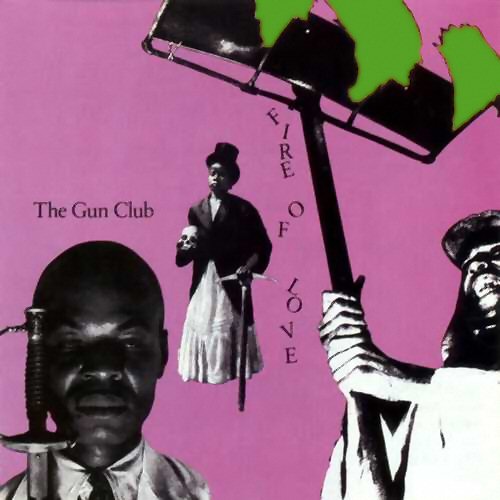
Fire Of Love - The Gun Club


Distorted, savage blues have long been a cherished American institution, from the satanic verses of Robert Johnson through the whacked-out mumbo jumbo of Captain Beefheart to the high-voltage punk blues of the early White Stripes. And in the annals of frenzied, voodoo-addled blues legend, Jeffrey Lee Pierce and The Gun Club stand alone as the undisputed kings of swamp punk: blues twisted into a barely recognizable form by drugs, black magic, and white kids barely learning to play their instruments. Fire Of Love dropped in 1981 and almost immediately changed the face of American roots music. While similar roots-punk groups like X were indulging their artier inclinations through poetic punk, and The Cramps were hamming it up and inventing "psychobilly", The Gun Club went straight for the jugular, hammering out eleven tracks of fiendish death rock that pulled together the most macabre aspects of blues, country, and primitive rock 'n' roll to create something altogether new and shocking. Jeffrey Lee Pierce's primal howl and descriptions of "huntin' for niggers down in the dark" and "fuck[ing] you 'til you die" still manage to sound both haunting and exhilariting, while the band creates a tense, sparse atmosphere of bottomless bass and slide guitar to back up his fearsome ranting. The band's frantic rendition of Robert Johnson's "Preachin' The Blues" teems with cathartic energy, while the reckless insanity of "For The Love Of Ivy" remains an unparalleled peak in roots rock nearly three decades after its recording. Elsewhere, "Ghost On The Highway" and "Fire Spirit" brim with horrific imagery and punk vigor, cementing Fire Of Love's reputation as a stone-cold classic from start to finish.

Sunday, November 15, 2009

Las Mañanitas - Pedro Infante


Cementing my reputation as the only white guy in the world who really digs ranchera music, I present to you the inimitable Pedro Infante. As a member of the trio of actors/musicians commonly referred to as "los Tres Gallos Mexicanos", Infante, along with other "Mexican roosters" Javier Solís and Jorge Negrete, basically defined ranchero style for the 40's and 50's, developing an on-screen persona as a resilient, romantic man of the people, a role that won him legions of followers. His music, like that of other ranchera singers of the time, is grandiose but never bombastic. While Jorge Negrete was known for his pitch-perfect, operatic tone, and Javier Solís for his rough-hewn, robust delivery, Infante was a singer of shades; alternating between a convivial tenor on tuneful mariachi-oriented rancheras and a sweet, tender croon on gentle boleros and waltzes. Infante's voice, in my humble yet accurate opinion, ranks right up there with enchiladas, el Día de los Muertos, and tequila as one of Mexico's greatest treasures. In fact, many Mexicans are inclined to agree, as evidenced by the thousands of devoted fans that flock to Infante's shrine in Mexico City each year. This album collects several of Infante's most beloved tunes, including the classic title track and the marvelous "En Tu Día". My only complaint, however, is that my personal favorite of Infante's numerous gems is absent from this collection. "Cien Años" is perhaps the loveliest canción ever to come out of la tierra Azteca, and I highly encourage you to seek it out.

Friday, November 13, 2009

BIPPP: French Synth Wave 1979-85 - Various Artists


The jury's still out on whether or not the French can rock, but when it comes to robotic jerking and convulsing, the French are kings. France's disco history has been well-documented thanks to big names like Daft Punk and Justice, but their history of robot rock is much more obscure. The French have always displayed a penchant for dabbling in the latest musical electronics, from the tape collage experiments of Pierre Schaeffer, to the hokey Moog rock of Jean-Jacques Perry and Pierre Henry, through the brief "space disco" craze of the late 70's, and living on in various incarnations through Air, the Ed Banger crew, and of course, Daft Punk. But what happens when the Gauls think to combine the computer sounds they love so very much with the tension and aggression of punk? (It may come as a surprise to some to learn that there is French punk other than "Ça Plane Pour Moi") The result is something like Suicide transposed from CBGB to Studio 54, en Français. Most of this collection comes from the post-disco era, however, so that's not quite an accurate summation of this sound. Honestly, it sounds like most early 80's "death disco" or early electro pop, but it contains rather unique strands that are difficult to classify. Some of this might alienate all but hardcore Francophiles (A Trois Dans Les WC's "Contagion", for instance), while more dance-oriented tracks like "Je T'ecris D'un Pays" from Les Visiteurs Du Soir and Act's "Ping Pong" would probably sound perfectly-suited to your local indie dance club. Enjoy it for what it is: French synth-punk. After all, did you even know that such a thing existed up until now?

Thursday, November 12, 2009

If Man But Knew - The Habibiyya

Allow me to begin by stating that I know virtually nothing about either Middle Eastern or traditional Islamic music. I have been known to get down to some Omar Souleyman and I certainly dig the sound of the oud, but my knowledge of Middle Eastern culture in general doesn't stretch much farther than knowing the difference between fattoush and tabbouleh. However, I do know quite a lot about 60's mod and psych, so I do know, for example, that high octane mod group The Action (an amazing Brit R&B group, in case you're interested) broke up sometime around 1968 and formed heavy psych band Mighty Baby, releasing two albums of rather bog standard proggy rock before - get this - three members of the band took a trip (double entendre alert) to Morocco, converted to Islam, and abandoned rock 'n' roll for good. Mighty Baby disbanded, and the new Sufi converts forged ahead as an authentic Islamic spiritual group called The Habibiyya. Here, unfortunately, is where I'm bound to fail as a trustworthy reviewer of this album: I think it's great, but for all I know, it could sound to Arabic music enthusiasts like Vanilla Ice sounds to hip-hop heads. Whatever. This sound is so completely removed from that of The Action and Mighty Baby that it's really quite remarkable that the band was able to reinvent themselves so thoroughly over the course of only two years. Needless to say, this ain't psychedelic rock, but it certainly is psychedelic in that it truly challenges and excites the senses. Drones, chants, and rhythms all meld together to create a marvelous head trip of an album. If Man But Knew sounds, to my ears, quite authentic as a piece of traditional Sufi music, but it also manages to retain some degree of eclecticism, particularly in the way it employs traditional Japanese instrumentation like the koto and shakuhachi. Overall, this is a wonder and a joy of an album, and one of the most fascinating products of the newly worldly and culturally aware musical community of the early 1970's.